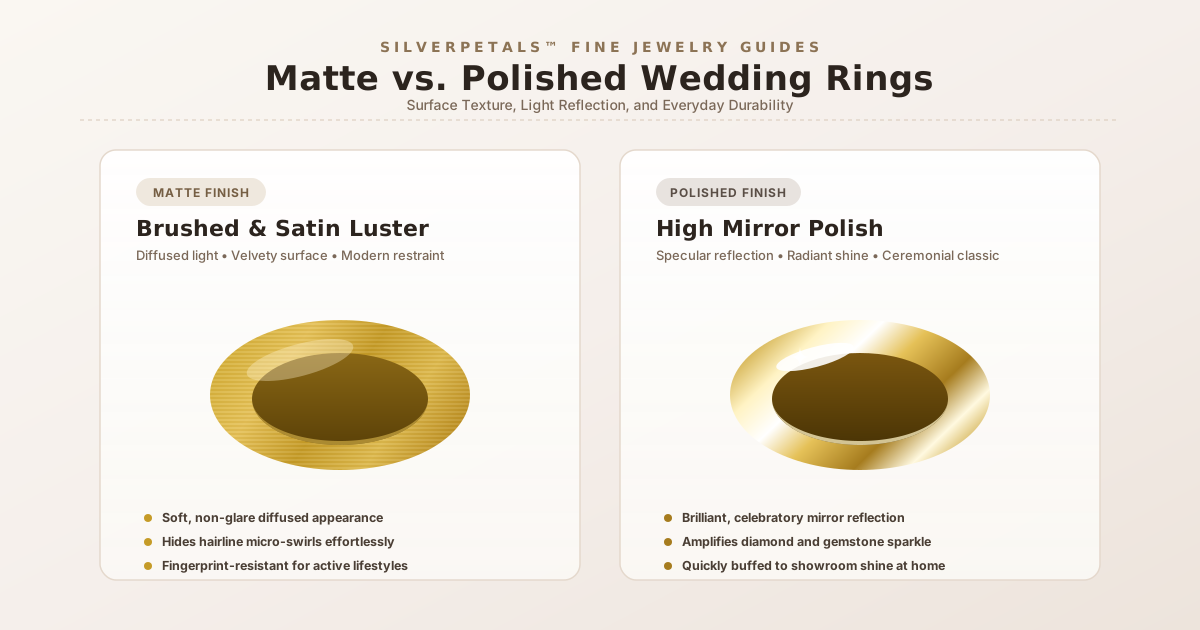
When shopping for wedding rings, couples debate precious metals, widths, and settings. Yet a defining surface detail dictates how your ring looks and ages: the exterior metal finish.
The choice between a matte and a polished surface dictates how your ring interacts with light, shows scratches, and complements your personal aesthetic. While high-polish rings offer brilliant bridal luster, matte rings deliver contemporary, understated elegance that lets the raw metal color take center stage.
Neither finish is objectively superior. The right choice depends on your lifestyle, career, and maintenance preferences. In this guide to matte vs polished wedding rings, we compare durability, scratch resistance, metal pairings, and long-term care to help you select your ideal ring finish.
What Is a Matte Finish?
A matte finish refers to any non-reflective or low-luster texture applied to a metal ring. Instead of reflecting light like a mirror, a matte surface diffuses incoming rays, creating a muted, velvety, or textured appearance.
Jewelers create matte textures using mechanical abrasion, wire wheels, sandblasting nozzles, or diamond tools. These techniques alter surface topography without changing the ring's metal purity or weight.
The four primary matte styles include:
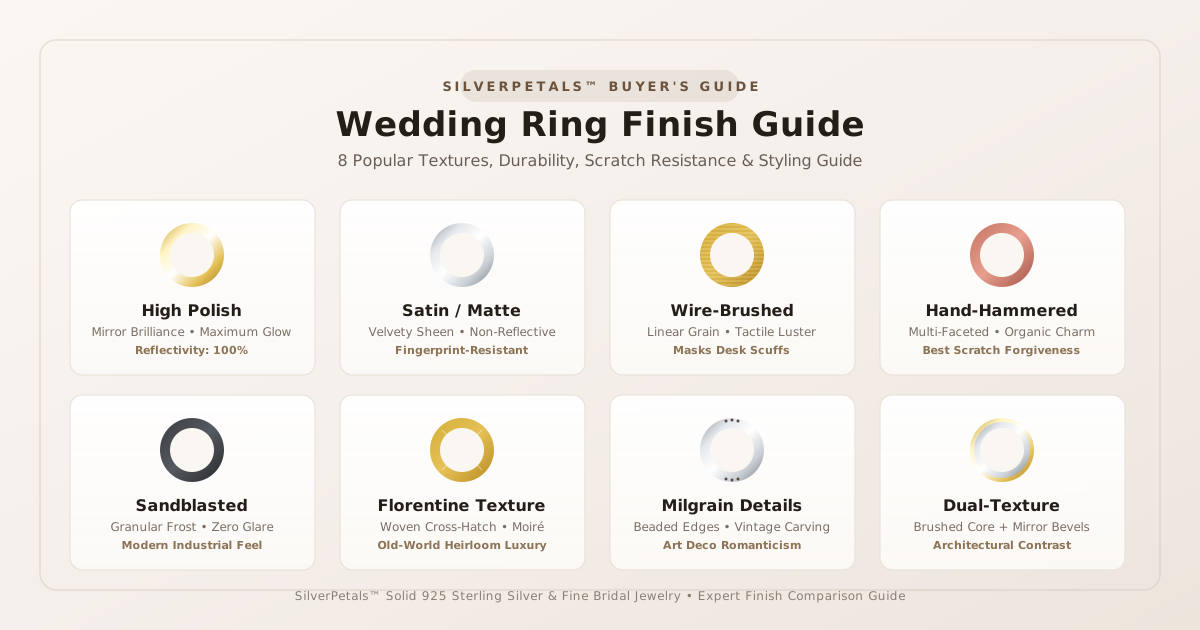
- Satin Finish: The smoothest matte style, featuring an ultra-fine grain that eliminates mirror glare and provides a soft pearlescent glow.
- Brushed Finish: Crafted with rotating wire brushes, displaying uniform parallel streaks along the band's circumference.
- Sandblasted Finish: Produced by blasting microscopic beads under pressure, yielding a granular, frosted appearance.
- Stone or Hammered Matte: Achieved with diamond wheels or hand-hammering, giving rings an organic, rustic texture with rich depth.
Matte finishes are prized for clean lines and highlighting metal undertones without glare.
What Is a Polished Finish?
A polished finish—frequently called high polish or mirror polish—is the classic benchmark in fine jewelry. Characterized by a smooth, glass-like exterior, a polished band reflects ambient light with brilliant intensity.
To achieve high polish, a bench jeweler sands raw metal through progressively finer grits before applying rotating muslin buffing wheels charged with compounds like Tripoli and jeweler's rouge. This process burnishes away surface imperfections until metal achieves optical reflectivity.
Key traits of a polished finish include:
- Maximum Brilliance: Polished metal reflects light across every curve, making diamonds and gemstones appear brighter.
- Timeless Tradition: High-polish rings represent the bridal benchmark, carrying a formal aesthetic that never fades.
- Silky Skin Contact: Buffed completely smooth, polished rings feel silky against fingers and glide effortlessly into gloves.
A polished ring captures attention instantly, embodying the celebratory romance of classic bridal jewelry.
Matte vs Polished: Side-by-Side Comparison
Understanding how matte and polished surfaces perform across key categories helps clarify which option aligns with your everyday expectations.
| Comparison Factor | Matte Finish | Polished Finish |
|---|---|---|
| Visual Appearance | Understated, muted, non-reflective, contemporary | High-shine, brilliant, mirror-reflective, classic |
| Scratch Visibility | Hides fine micro-swirls well; deep gouges appear shiny | Shows hairline scratches and fingerprints quickly |
| Initial Durability | Retains low-shine character under normal wear | Surface dulls slightly within initial months of daily use |
| Aging Over Time | Worn areas gradually burnish smoother and shinier | Sharp mirror shine softens into a warm natural patina |
| Maintenance Routine | Occasional re-texturing with abrasive pad or bench visit | Regular buffing with polishing cloth; periodic jeweler polish |
| Everyday Versatility | Casual, understated, blends naturally with modern attire | Formal, glamorous, pairs seamlessly with traditional sets |
| Average Pricing | Standard pricing; identical metal value | Standard pricing; identical metal value |
Appearance and Light Reflection
The primary difference is reflectivity. Polished rings act as miniature mirrors, bouncing light outward and highlighting band curvature. Matte rings absorb and diffuse light, drawing focus toward band geometry, metal color, and craftsmanship.
Scratches and Everyday Wear
A common myth suggests matte rings never scratch. In reality, all precious metals scratch when contacting harder surfaces like doorknobs, tools, or stone countertops.
On a polished ring, contact creates hairline scratches that interrupt mirror reflection, making early wear visible in direct light. On a matte ring, abrasions burnish micro-textured peaks, creating tiny shiny patches against the dull background. Over time, both finishes soften into a natural patina unique to your lifestyle.
Fingerprints and Smudges
Because polished surfaces are optically flat, skin oils create noticeable smudges requiring frequent wiping. Matte surfaces disperse skin oils across their microscopic grain, keeping the ring looking clean throughout the day.
Pros and Cons of Each Finish
Evaluating the advantages and drawbacks of each finish ensures your choice aligns with your lifestyle.
Advantages of Matte Wedding Rings
- Modern Aesthetic: Delivers a relaxed, contemporary look favored by modern buyers.
- Fingerprint Resistant: Resists oil smudges and moisture marks during daily handling.
- Understated Elegance: Ideal for anyone seeking subtle jewelry without reflective flash.
- Accentuates Metal Tones: Highlights the warm nuance of gold or cool tone of platinum without glare.
Disadvantages of Matte Wedding Rings
- Gradual Burnishing: Daily friction against fabrics slowly buffs the texture smoother over time.
- Refinishing Needs: Complex sandblasted textures require bench jeweler tools to reapply.
- Muted Diamond Reflection: Diffuses light rather than reflecting ambient brilliance into gems.
Advantages of Polished Wedding Rings
- Iconic Bridal Look: The classic bridal aesthetic that coordinates effortlessly with fine jewelry.
- Boosts Gemstone Sparkle: Reflects ambient light into neighboring stones, amplifying brilliance.
- Simple Upkeep: Hairline micro-scratches buff out quickly with a jeweler's cloth.
- Universal Servicing: Jewelers worldwide can restore a mirror polish in minutes.
Disadvantages of Polished Wedding Rings
- Early Micro-Scratches: Shows fine hairline swirls within initial weeks of daily wear.
- Frequent Smudging: Requires regular wiping to remove finger oils and lotion film.
- Intense Glare: Bright outdoor sunlight can create high-contrast reflections.
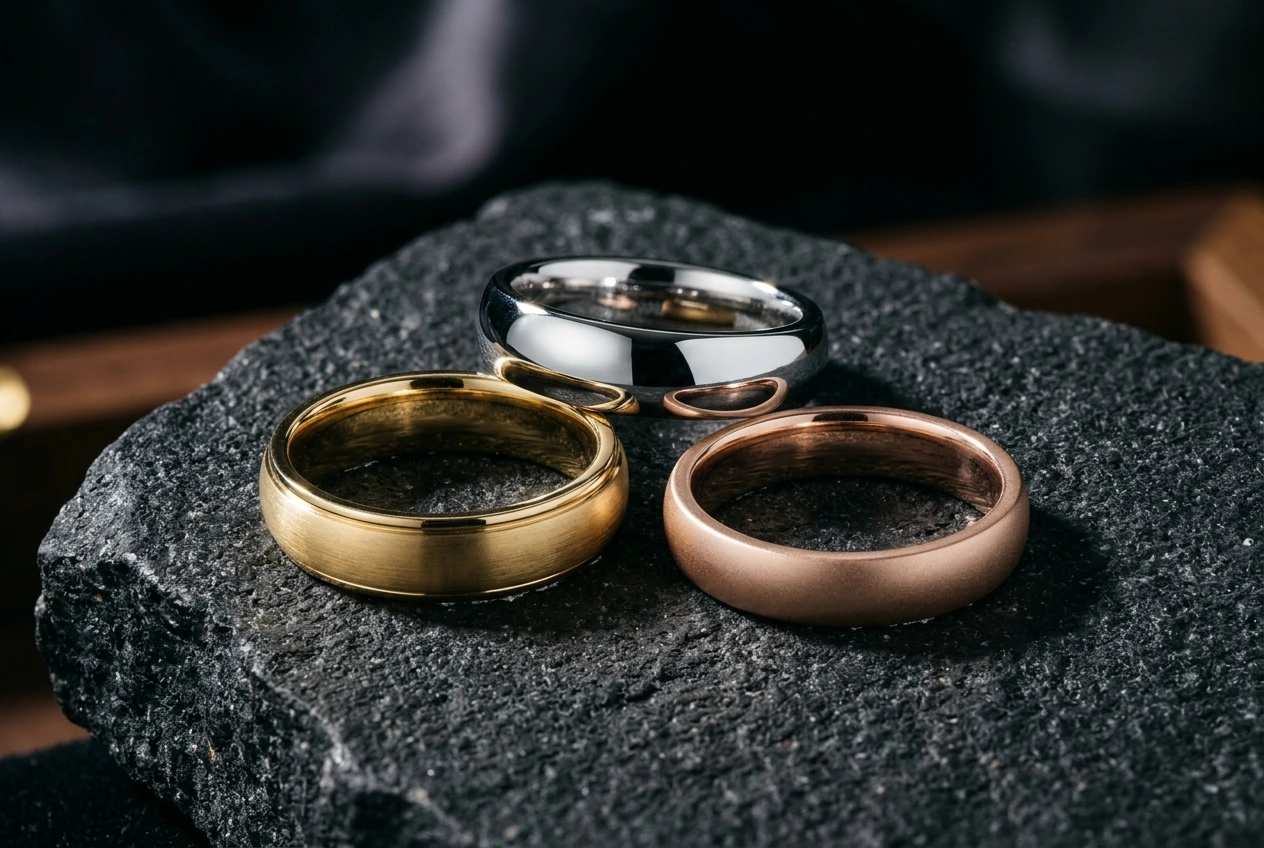
Which Metals Suit Which Finish?
The metal you select interacts directly with the finish you choose, impacting durability, texture depth, and visual tone.
Yellow Gold and Rose Gold
Warm precious metals look extraordinary in both finishes. A polished yellow gold band creates an opulent gleam that feels historic and regal. Conversely, a brushed or satin finish on yellow or rose gold mutes high-contrast glare, producing a soft, buttery warmth that feels relaxed and sophisticated.
White Gold and Platinum
Polished platinum and white gold offer brilliant chrome-like reflection. However, platinum develops a natural patina over time. Choosing a satin or brushed finish on platinum pre-ages the band gracefully, providing a rich, durable aesthetic from day one.
Alternative Modern Metals (Titanium, Tungsten, Tantalum)
Alternative metals possess unique metallurgical traits:
- Tungsten Carbide: Extremely scratch-resistant, polished tungsten retains its mirror shine for decades. Matte finishes on tungsten are durable but challenging to re-apply if damaged.
- Titanium: Lightweight and hypoallergenic, titanium looks phenomenal with sandblasted or brushed matte textures that celebrate its modern industrial heritage.
- Tantalum: Naturally dark gray and dense, tantalum pairs exceptionally well with heavy brushed, hammered, or distressed matte finishes.
Solid 925 Sterling Silver
Solid sterling silver is an accessible, radiant precious metal. A polished silver band gleams brightly, while a satin or brushed sterling silver band offers a contemporary artisan feel that wears comfortably in casual and formal settings.
Matte vs Polished for Men's and Women's Rings
Gender norms in jewelry have broadened dramatically, giving both men and women total freedom in selecting ring textures.
Men's Wedding Band Trends
Men's wedding rings have seen a massive surge in matte finishes over the past decade. Many men who do not typically wear jewelry prefer the understated, rugged aesthetic of a brushed or satin band over a reflective high-polish ring.
Popular contemporary designs for men often combine both finishes:
- Dual-Finish Bands: A ring featuring a brushed matte center channel flanked by high-polish beveled edges combines modern texture with classic sophistication.
- Satin with Step Edges: A satin top profile with high-polish recessed borders creates visual depth without excessive shine.
Women's Wedding Band Trends
In women's jewelry, high polish remains the prevailing choice, largely because it seamlessly matches diamond engagement ring shanks. A high-polish wedding band creates a cohesive, fluid bridal stack alongside a brilliant diamond setting.
However, matte finishes are gaining rapid popularity among women who prefer minimalist aesthetics, organic jewelry designs, or standalone wedding bands worn during athletic activities. Pairing a satin-finish band with a solitaire engagement ring creates an intentional texture contrast that makes the center diamond pop.
How to Care for and Maintain Each Finish
Proper care ensures that whichever finish you choose continues to look intentional throughout your marriage.
Caring for Matte Wedding Rings
To keep a matte ring in top condition:
- Regular Cleaning: Soak the ring in warm water with mild dish soap for ten minutes. Clean trapped oils with a soft baby toothbrush, rinse, and pat dry with a lint-free towel.
- Avoid Standard Polishing Cloths: Never use chemically treated jeweler cloths on matte bands, as polishing rouges will erase the texture.
- Refreshing Brushed Finishes at Home: For plain gold, platinum, or silver bands with straight brushed finishes, gently stroke in one direction with a clean synthetic scouring pad. Avoid this on plated or sandblasted metals.
- Professional Re-Texturing: Every two to three years, have a jeweler re-sandblast or re-brush your texture for a nominal fee.
Caring for Polished Wedding Rings
Maintaining high polish involves preserving reflectivity:
- Routine Microfiber Buffing: Use a dual-sided jeweler's cloth to lift surface grime and restore mirror luster.
- Ultrasonic Cleaning: Periodic ultrasonic cleaning dissolves lotions and oils behind stones, restoring brilliance.
- Professional Buffing: Every one to two years, visit a jeweler for professional wheel buffing to erase deeper scratches. Avoid polishing excessively to preserve metal thickness.
How to Choose Based on Lifestyle, Skin Tone, and Engagement Ring Pairing
Choosing between matte and polished finishes becomes straightforward when you evaluate three practical elements of your daily routine.
1. Daily Lifestyle and Occupation
Your daily routine exerts the greatest physical influence on your ring:
- Active Lifestyles and Trades: If you lift weights, garden, or handle tools, rings take a beating. Brushed matte finishes disguise everyday scrapes far better than mirror polishes.
- Office and Corporate Careers: Working at desks and laptops suits both finishes. Polished bands convey classic executive polish, while satin finishes offer quiet contemporary style.
- Healthcare and Hospitality: Professionals washing hands frequently or wearing gloves appreciate matte surfaces because they do not highlight water spots or soap film.
2. Skin Tone and Visual Contrast
How a finish interacts with skin tone influences overall aesthetic balance:
- Warm Skin Tones: Brushed or satin finishes on yellow or rose gold soften glare, blending organically with warm and olive skin tones.
- Cool Skin Tones: High-polish platinum and white gold provide crisp, icy contrast against cool or deep skin tones.
- Subtle vs. Statement: Polished bands catch attention across a room, whereas matte bands serve as subtle, understated extensions of your personal aesthetic.
3. Engagement Ring Pairing
If pairing your wedding band with an engagement ring, harmony is key:
- Matching Finishes: A polished wedding band paired with a polished engagement ring creates an uninterrupted, cohesive bridal set.
- Intentional Contrast: Pairing a satin band with a high-polish engagement ring creates an artful, modern contrast highlighting both pieces.
- Metal Hardness: Ensure adjacent rings share similar metal hardness so one ring does not erode the other over years of friction.
Frequently Asked Questions About Matte vs Polished Rings
Do matte wedding rings turn shiny over time?
Yes, matte rings gradually develop shinier areas with continuous wear. As the micro-textured surface rubs against pockets, fabrics, tools, and skin over months and years, microscopic ridges slowly burnish down. Fortunately, a bench jeweler can easily restore your original matte texture within a few minutes using abrasive wheels or sandblasting tools.
Do polished wedding rings lose their shine?
Yes, high-polish rings naturally lose their showroom mirror reflection over time. Daily contact with hard surfaces causes countless microscopic hairline scratches, known in the jewelry industry as patina. Rather than remaining mirror-bright, polished rings soften into a warm, gentle glow that many jewelry enthusiasts find deeply charming and nostalgic.
Can you change a ring's finish from matte to polished or vice versa?
In almost all solid precious metal rings (such as yellow gold, rose gold, white gold, platinum, and sterling silver), a jeweler can alter the finish at any time. A polished ring can be converted to brushed, satin, or sandblasted in a single bench visit. Similarly, a matte ring can be buffed to a mirror polish whenever you want a change of style.
Which finish is better for hiding scratches?
A matte finish—particularly brushed or sandblasted—is generally better at disguising fine surface scuffs and hairline scratches than a high-polish finish. While deep scratches will still appear, everyday micro-swirls blend into the textured grain. On a polished ring, even minor hairline scratches disrupt the mirror reflection and become visible under direct lighting.
Are matte wedding rings more expensive than polished rings?
No, matte and polished wedding rings typically cost the same when crafted from identical metals and widths. Applying a matte texture requires similar bench craftsmanship to achieving a high mirror polish. Some intricate custom stone textures may carry a small artisan fee, but standard satin and brushed finishes carry no price difference.
Conclusion: Choosing Your Ideal Wedding Ring Finish
Selecting between a matte and polished wedding ring is ultimately a celebration of your personal style and daily rhythm. A polished band offers timeless romance, ceremonial heritage, and brilliant light reflection that honors bridal tradition. A matte band offers modern restraint, tactile depth, and effortless daily durability that fits active, contemporary lives.
Whichever surface treatment you choose today, remember that jewelry finishes are dynamic. Your wedding band will naturally evolve alongside your marriage, acquiring a one-of-a-kind patina that tells the story of your shared experiences. Furthermore, solid precious metal rings can easily be refinished or polished whenever you wish to refresh their original luster.
Take time to try on both textures in person, test how they look in natural daylight, and select the finish that feels authentic to who you are.
Helpful Sizing & Style Resources
Ready to explore your options and find your exact measurements?
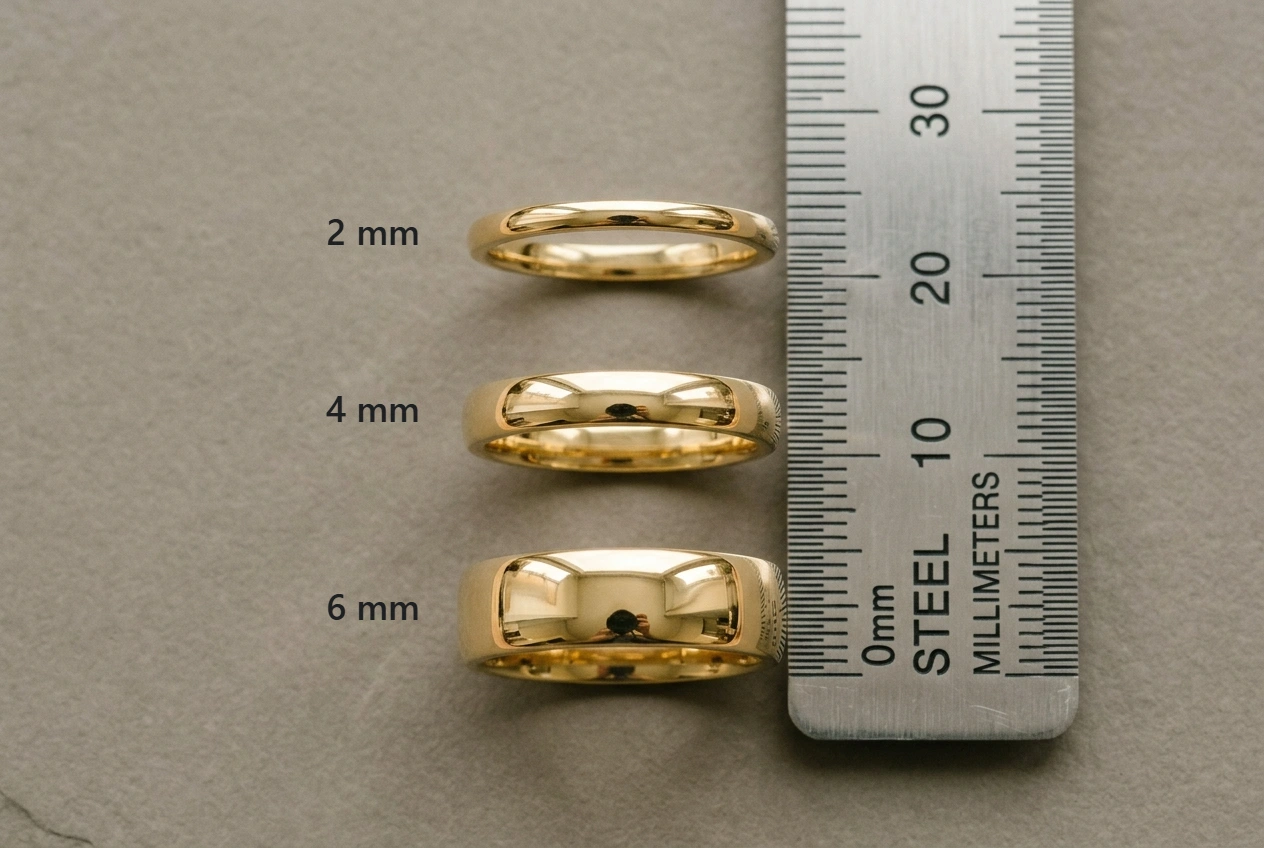
- Compare millimeter dimensions with our Wedding Band Width Guide.
- Discover ergonomic domed shanks in our Comfort Fit Wedding Bands Guide.
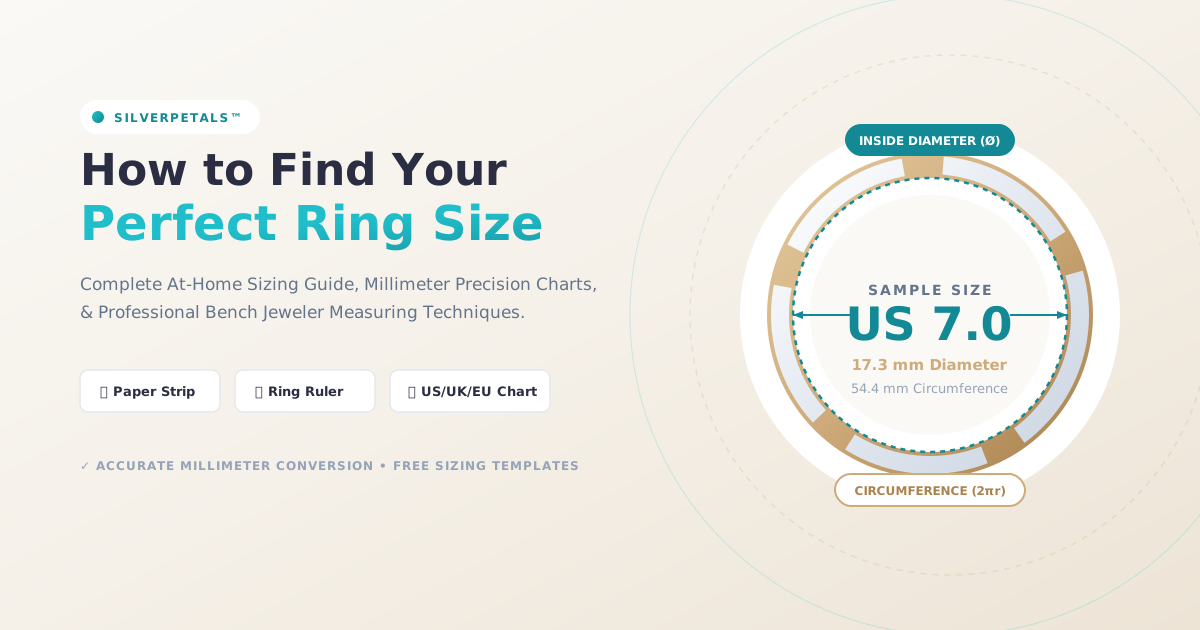
- Learn how to measure your finger accurately at home with our How to Find Your Ring Size Guide.
- Explore handcrafted styles in our Solid 925 Sterling Silver Rings Collection.