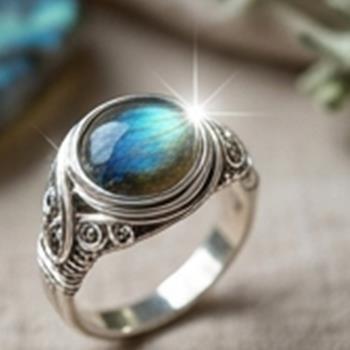
Wire wrapping is one of the most accessible and rewarding techniques in jewelry making. Without needing a jeweler's torch or soldering equipment, you can create a secure, breathtaking ring featuring a natural flash Labradorite cabochon and solid sterling silver wire.
🛠️ Supplies & Tools Checklist
Check off items as you prepareStep-by-Step Instructions
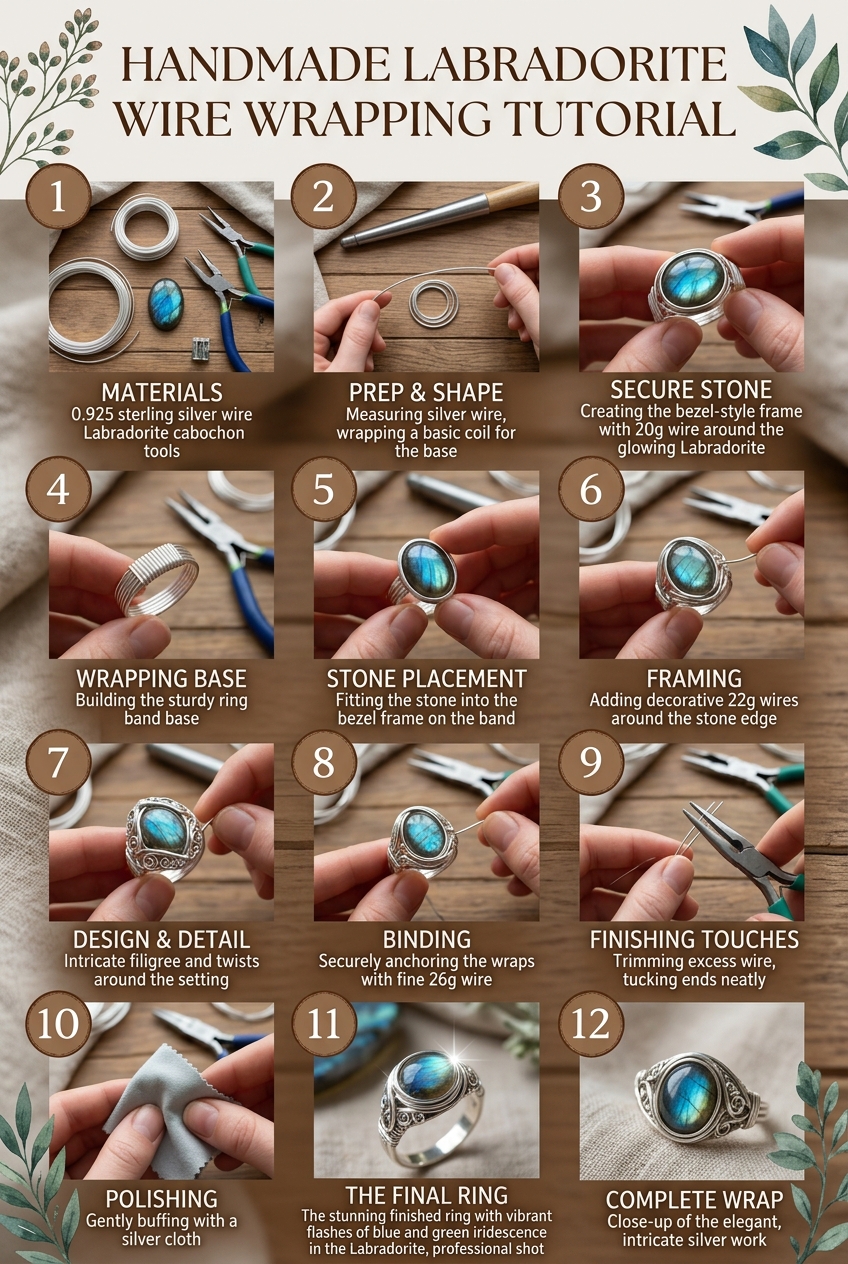
Straightening & Bundling Base Wires
Cut three equal lengths of 20-gauge half-hard wire (approx. 25cm each). Run your nylon jaw pliers down each wire several times to warm the metal and ensure all three strands are straight and aligned side-by-side.
Weaving the Central Ring Band
Take your 26-gauge weaving wire and begin binding the three base wires together using a simple over-under weave. Continue weaving for approximately 4 to 5cm, which will form the comfortable underside band of your ring.
Shaping on the Ring Mandrel
Press your woven section firmly around your metal ring mandrel at your target ring size. Bend the unwoven ends upwards at a 90-degree angle so they form a cradle on either side of where the gemstone will rest.
Seat & Secure the Labradorite Cabochon
Place your Labradorite cabochon flat into the center of the cradle. Use your front wire ends to gently bend over the bezel edge of the stone, creating a firm botanical petal grip that locks the gemstone in place.
Decorative Petal Sweeps & Anchoring
With the remaining wire tails, curve organic decorative sweeps resembling silver petals around the setting. Tightly wrap the tips twice around the base band, cut flush, and tuck with chain nose pliers so there are zero sharp edges.
Final Polish & Inspection
Buff the completed piece with a soft microfiber sunshine cloth. Inspect all wire ends along the inside of the ring with your fingertips to ensure a silky-smooth, snag-free finish.