1. Introduction: Why Ring Comfort Matters
A wedding band is worn through work, fitness, and rest, experiencing thousands of daily hand movements. Tactile comfort is just as vital as visual beauty; a ring that catches on knuckles quickly becomes frustrating.
In fine jewelry, comfort fit wedding bands provide effortless everyday wear. Unlike flat-interior rings, comfort-fit styles feature a domed inner wall engineered for natural finger movement. This guide explores comfort-fit construction, standard-fit comparisons, width and sizing considerations, and how to choose your ideal ring.
2. What Are Comfort Fit Wedding Bands?
"Comfort fit" describes the internal geometry of a ring shank resting against your finger. The interior metal forms a gentle convex dome rather than a flat plane:
Cross-Section View of Comfort Fit Interior:
Outer Surface:     --------------------------- (Flat, domed, or beveled)
                        ^               ^
                    Metal Core       Metal Core
                        v               v
Inner Surface:     (-------------------------) <--- Curved, domed interior wall
This curvature provides two ergonomic advantages:
- Contoured Contact Surface: Removing sharp 90-degree corners lets tissue flex naturally.
- Relieved Edge Transition: A rounded rim glides over expanding tissue during grip rather than pressing into skin folds.
Bench jewelers and CNC machining sculpt these ergonomic domes into virtually any precious metal.
3. Comfort Fit vs. Standard Fit Wedding Bands
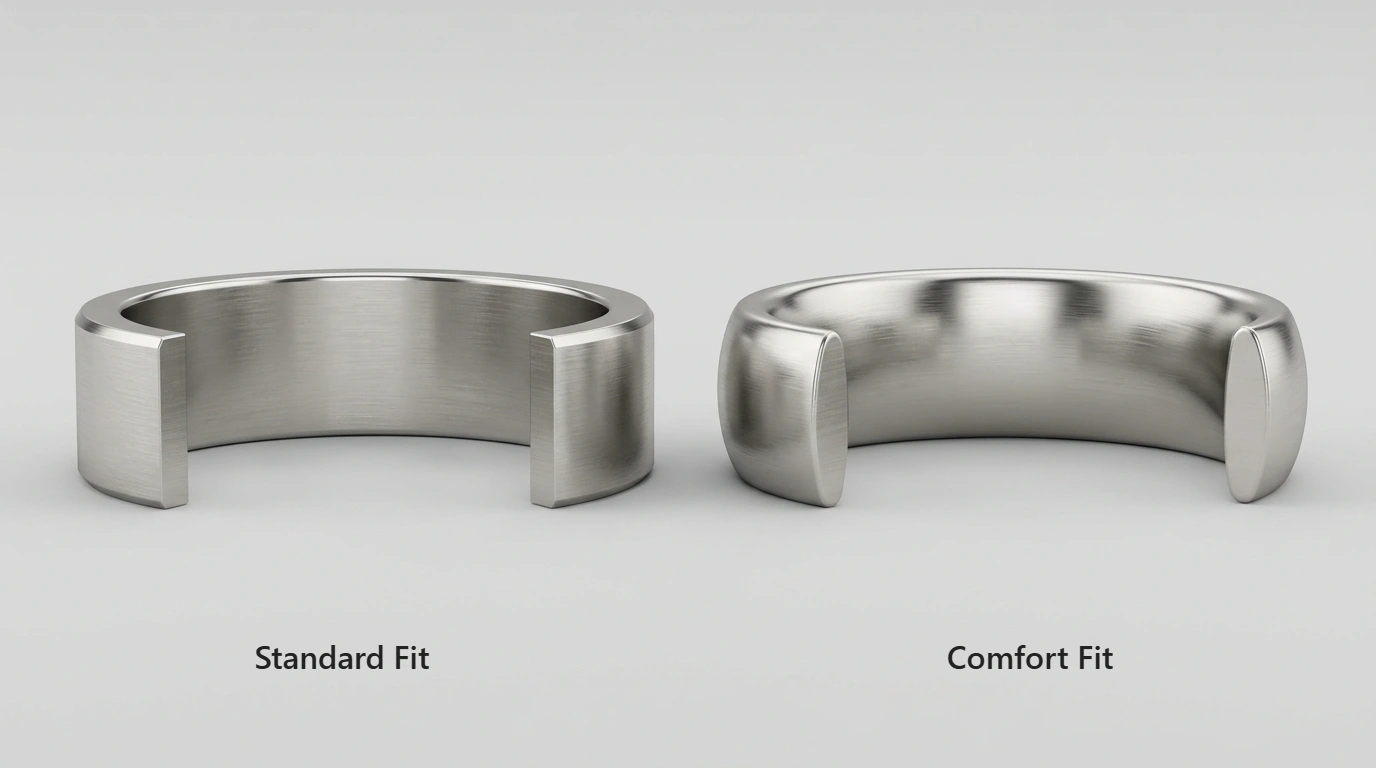
A standard-fit band features a flat interior wall with uniform inside diameter. While flat edges suit narrow styles, they can feel rigid in wider profiles.
| Feature | Standard Fit | Comfort Fit |
|---|---|---|
| Interior Geometry | Flat wall | Gently domed curve |
| Inner Rim Edge | Straight corner | Softened, rounded rim |
| Skin Contact | Cylindrical contact | Contoured central contact |
| Knuckle Movement | Edge meets resistance | Rounded rim glides smoothly |
| Grip & Flexion | Edges press skin | Rounded edges reduce pressure |
| Moisture | Soap/water collect | Soap/water collect; drying needed |
| Pricing & Weight | Varies by metal/size | Varies by metal/size |
When comparing comfort fit vs standard fit designs, edge friction is the key difference: a curved rim glides over skin folds with noticeably less resistance.
4. Main Benefits of Comfort Fit Wedding Rings
Couples appreciate practical advantages during daily wear, though comfort varies with anatomy, dimensions, and preference.

A. Reduced Edge Pressure
When gripping steering wheels or tools, flat edges pinch fingers. A comfort-fit dome distributes contact smoothly, reducing localized pressure during flexion.
B. Smoother Movement Over Knuckles
For prominent knuckles, a convex interior acts as a ramp, easing the band over skin folds with less friction than flat corners.
C. Moisture and Skin Care Considerations
Soap and water collect under any ring. Relieved edges reduce suction, but curved interiors do not prevent irritation. Regular cleaning, removing rings before washing, and drying skin thoroughly remain essential.
D. Substantial Structural Feel
Comfort-fit bands often feature a thicker center wall than flat bands, providing reassuring heft that varies with metal and width.
Overall comfort is an individualized experience depending on anatomy, width, geometry, surface finish, temperature, and personal preference.
5. Fit Considerations Across Band Widths and Styles
Whether a comfort-fit profile is beneficial depends heavily on band width and styling preferences:
Wider Band Considerations (Commonly 5 mm to 8 mm)
Broad bands create extensive skin contact where flat edges feel rigid. For broader rings, comfort fit men's wedding bands and wide bridal styles provide ergonomic relief, making 6 mm to 8 mm widths far less obtrusive during daily wear.
Narrower Band Considerations (Commonly 1.5 mm to 4 mm)
On delicate bands under 2 mm, interior curvature is subtle, yet comfort fit remains valuable:
- Curved Stacking Bands: Stacking rings increases coverage; rounded rims prevent flat edges from rubbing uncomfortably.
- Medium-Width Bands: Popular 3 mm to 4 mm bands benefit from rounded rims during finger flexion.
- Sensitive Skin: Softened inner rims reduce daily frictional contact.
6. How Ring Width Affects Comfort and Sizing
When choosing comfort fit wedding rings, width is the primary factor influencing tactile fit.
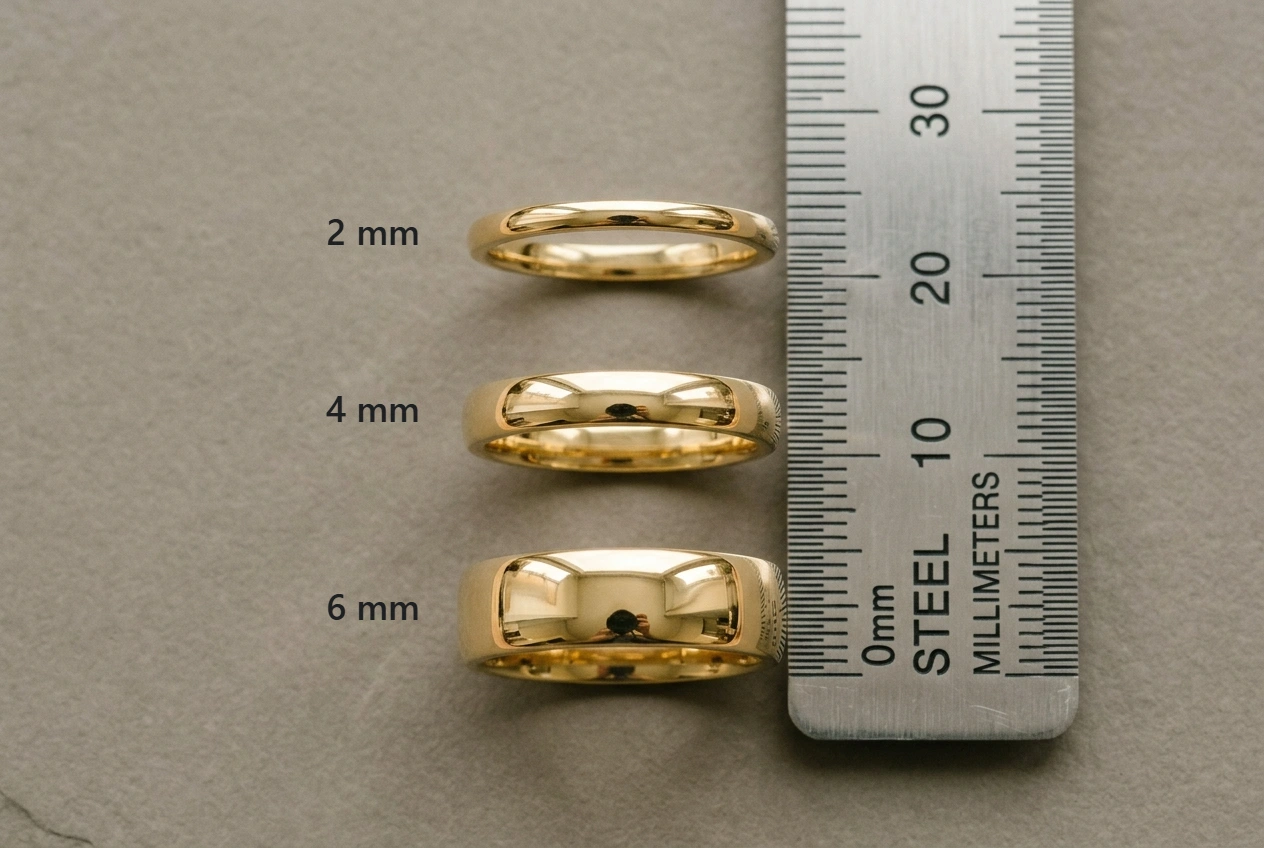
The Mechanics of Wedding Band Width and Comfort
A narrow 2 mm band covers minimal skin, whereas wide comfort fit wedding bands (7 mm to 8 mm) displace substantial tissue during flexion:
Width Progression & Skin Coverage:
2 mm  ---> Minimal coverage; subtle fit difference
4 mm  ---> Classic width; noticeable comfort-fit advantage
6 mm  ---> Substantial coverage; comfort-fit strongly recommended
8 mm+ ---> Maximum presence; requires careful sizing evaluation
Understanding wedding band width and comfort prevents sizing errors: as width expands, interior curvature becomes vital to daily comfort. For a comprehensive breakdown of millimeter proportions, see our Wedding Band Width Guide.
Sizing Realities and GIA Guidance
Comfort-fit rings do not universally require sizing down:
- Perceived Roominess: Relieved rims let narrow bands (2 mm to 4 mm) glide easily; some size down a quarter size, while others retain standard sizing.
- Wide Band Resistance: Broader bands (6 mm to 8 mm) cover more tissue and fit snugger; wearers often keep their standard size or size up.
- GIA Guidance & Jeweler Recommendations: As GIA notes, wide shanks cover more surface area and fit more snugly than narrow bands. While domed shanks slide easily over the knuckle, jewelers emphasize that there is no universal quarter-size downsizing formula; always test a comfort-fit sizing gauge in your intended band width.
7. Best Metals for Comfort Fit Wedding Bands
Metal selection influences visual style, density, tactile weight, and maintenance:
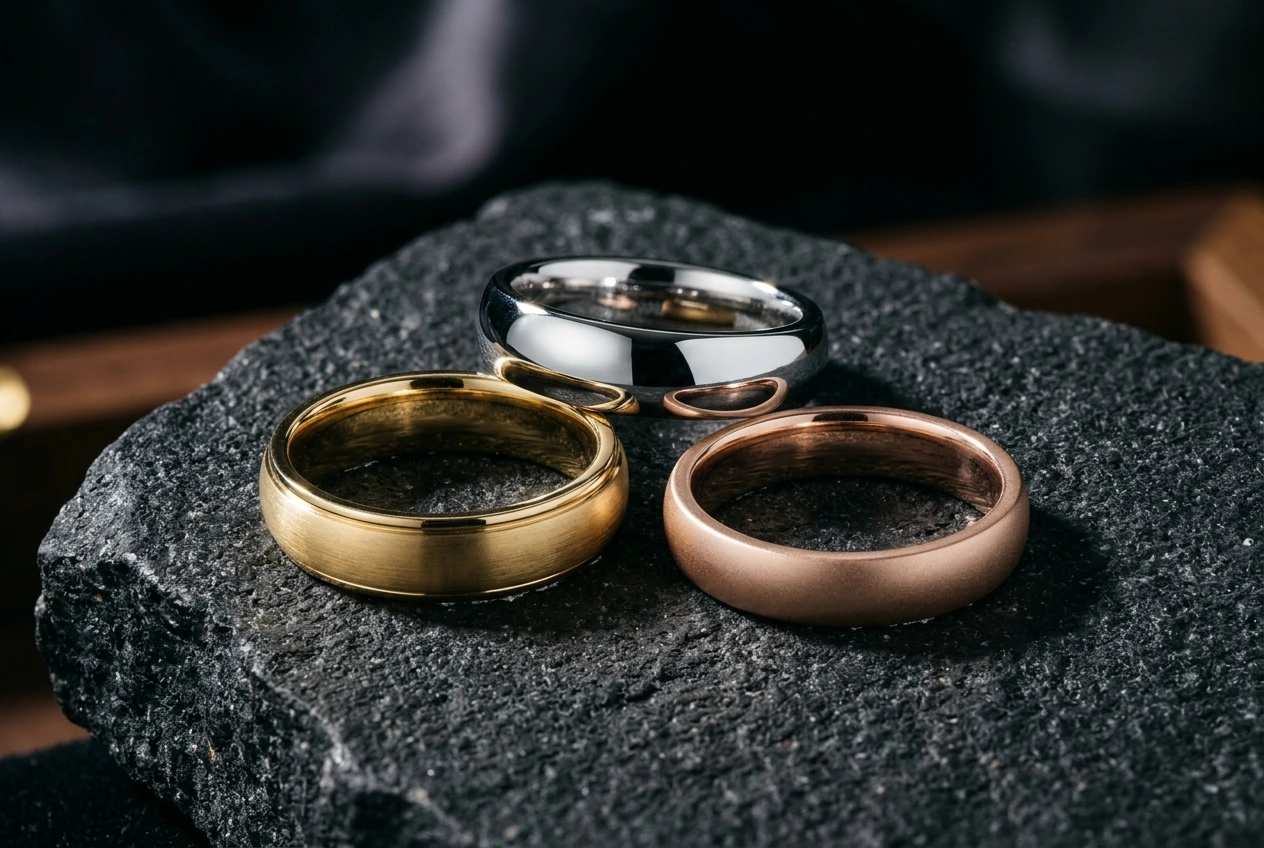
1. Comfort Fit Gold Wedding Bands (Yellow, White, and Rose Gold)
- Yellow Gold: 14k or 18k comfort fit gold wedding bands develop an esteemed patina.
- White Gold: Finished in rhodium plating requiring periodic replating.
- Rose Gold: Alloyed with copper for blush warmth; test first if sensitive.
2. Platinum Comfort Fit Bands
Platinum is dense and biocompatible. While hypoallergenic for most, no metal is non-reactive for everyone. Surface scratches displace metal without shedding volume, creating a satin patina.
3. Solid 925 Sterling Silver
An accessible, bright, lightweight option. Because silver is softer than gold or platinum, adequate wall thickness ensures lasting durability. Regular polishing preserves its luster.
4. Contemporary Alternative Metals (Titanium & Tungsten Carbide)
- Titanium: Lightweight and corrosion-resistant, though bench resizing is extremely limited.
- Tungsten Carbide: Highly scratch-resistant with a gunmetal tone. It cannot be bench-resized; sizing adjustments require manufacturer replacement.
Price and weight depend on metal, purity, width, and craftsmanship. While domed interiors can use slightly more metal than flat bands of identical dimensions, pricing varies across designs.
8. Are Comfort Fit Rings Easier to Put On and Take Off?
In most cases, yes. The mechanical glide of a comfort-fit interior is a primary daily benefit, though ease of movement varies with knuckle anatomy and width:
Gliding Mechanics Over the Knuckle:
Standard Fit:    [Flat Corner Edge] ---> Pushes Against Skin Folds
Comfort Fit:     (Rounded Bevel)    ---> Glides Over Knuckle Contour
When sliding on, a standard band's flat edge catches on skin folds. A comfort-fit ring tapers toward the center dome, guiding the band smoothly over the joint.
How Should a Wedding Band Fit Once in Place?
Understanding how should a wedding band fit balances daily comfort with security:
- Smooth On: Slides over the knuckle with gentle pressure without forcing.
- Comfortable at Rest: Rests naturally at the finger base without restricted circulation.
- Gentle Resistance Off: Meets mild resistance at the knuckle, requiring a deliberate pull so it will not slip off during cold weather or washing.
9. How to Choose the Right Comfort Fit Wedding Band
Selecting your band balances aesthetics, finger anatomy, and daily lifestyle:
Step 1: Evaluate Daily Lifestyle
- Hands-on routines: Low-profile bands with rounded profiles prevent snagging on equipment.
- Desk work: Medium widths (3 mm to 5 mm) offer balanced palm comfort on flat desks.
Step 2: Choose Your Exterior Profile
While the interior is domed, the exterior comes in distinct silhouettes:
- Traditional Domed (Court Shape): Rounded inside and outside; classic bridal look.
- Flat Exterior (Flat Court / Pipe Cut): Flat outside with an ergonomic domed interior.
- Beveled Edge: Flat surface with angled chamfers; clean contemporary style.
Step 3: Match Hand Anatomy
- Shorter fingers: Narrow bands (2 mm to 4 mm) avoid crowding joints.
- Longer fingers: Wider bands (5 mm to 8 mm) provide balanced visual proportion.
- Prominent knuckles: Test comfort-fit gauges to balance knuckle clearance with stability; consult a jeweler about sizing beads if needed.
10. How to Find Your Correct Ring Size
Determining your accurate size for a comfort-fit band requires measurement tools reflecting curved interior profiles.
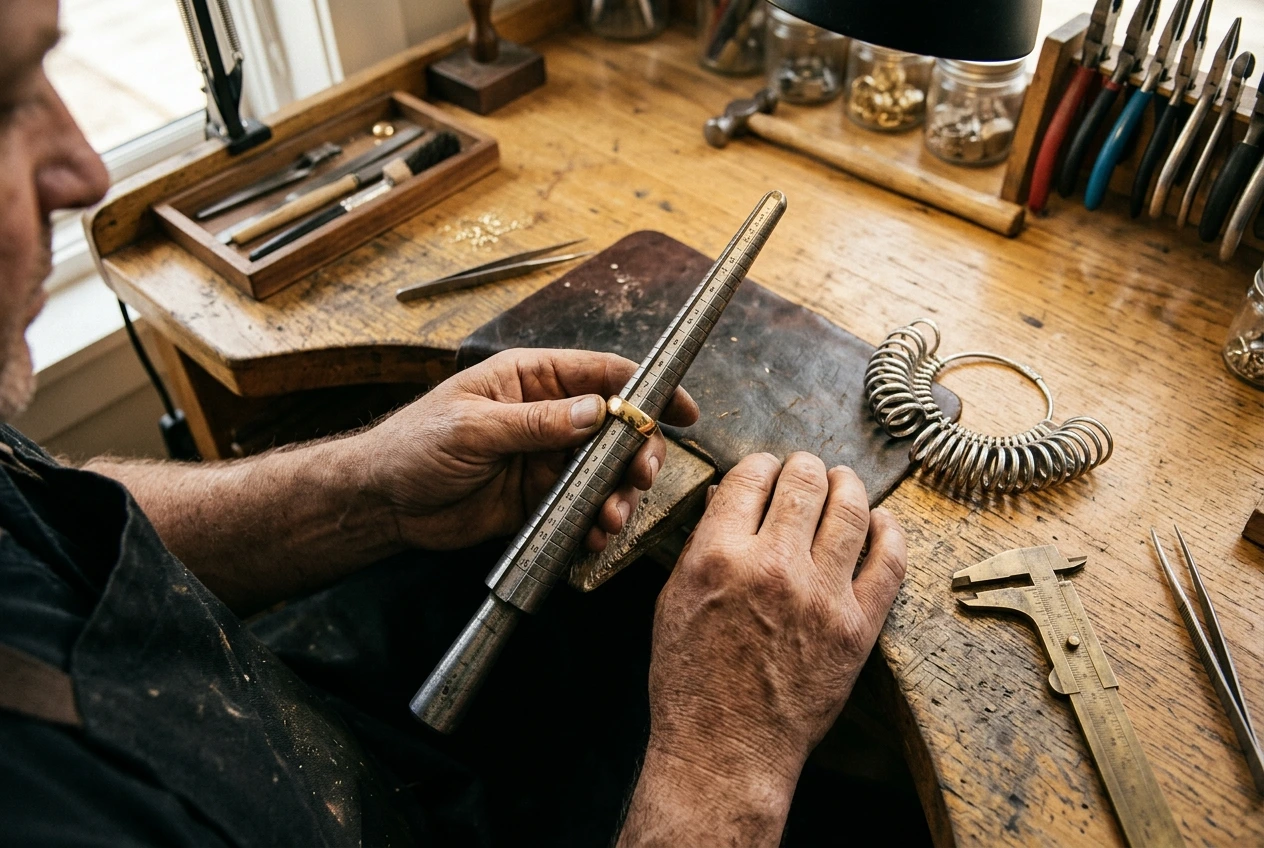
Why Standard Flat Sizers Can Be Misleading
Plastic sizing belts and flat metal rings simulate standard-fit interiors. Higher edge friction can lead you to choose a size that feels loose in a comfort-fit ring.
Jeweler-Backed Sizing Recommendations
- Request Comfort-Fit Gauges: Test sizing rings with curved interiors matching your intended band width.
- Account for Band Width: A 2 mm gauge fits differently than an 8 mm band; always test matching widths.
- Measure at Normal Temperature: Measure at room temperature in the afternoon when finger size stabilizes.
- Test Ring Stability: Move your hand naturally; the ring should remain seated without slipping.
For measurement techniques and conversion charts, consult our in-depth Ring Size Guide & Conversion Chart.
11. Care and Maintenance Tips
Maintaining the comfort and appearance of a comfort-fit wedding band requires simple daily habits:
- Clean the Interior Curve: Soap and lotions accumulate along the inner curve. Soak the band in warm water with mild dish soap, then gently brush with a soft toothbrush.
- Dry Thoroughly: Slide the ring forward after handwashing so both skin and inner dome dry completely.
- Preserve Interior Geometry: When polishing scratches, ask your jeweler to avoid aggressive interior buffing to protect the domed contour.
- Safe Storage: Store the ring in a fabric-lined pouch during workouts or gardening.
For precious metal preservation instructions, explore our Sterling Silver Jewelry Care Guide.
12. Frequently Asked Questions (FAQs)
1. Do comfort fit wedding bands run bigger than standard fit bands?
Comfort-fit rings share the central diameter of standard-fit rings of the same size, but rounded edges reduce friction. Some wearers perceive this as roomier, while others wear their usual size. Sizing down by a quarter size is not universal; test a comfort-fit gauge in your intended width.
2. Can a comfort fit wedding band be resized easily?
Plain bands in gold, platinum, and silver are readily resizable by jewelers while preserving the inner dome. Alternative metals like tungsten carbide cannot be bench-resized, titanium resizing is extremely limited, and eternity bands are impractical to resize.
3. How do I know if my ring is comfort fit or standard fit?
Inspect the inner edge. Standard-fit rings have flat interior walls meeting edges at sharp corners. Comfort-fit bands curve outward, feeling rounded and smooth along the inner rim.
4. Does a comfort fit wedding band cost more than a standard fit band?
Cost depends on metal, width, thickness, and craft. While domed interiors can use slightly more metal than flat bands of identical dimensions, prices vary across manufacturers.
5. Should my wedding band match my engagement ring's fit profile?
Matching profiles is not required. While paired comfort-fit bands sit flush together, a comfort-fit band provides ergonomic benefits even alongside a flat-interior engagement ring.
13. Conclusion: Choosing a Lifetime of Comfortable Wear
Your wedding band accompanies you through every daily moment. While precious metals express style, the internal fit profile determines how much you enjoy wearing your ring every day.
By choosing a comfort fit wedding band, you select an ergonomic profile engineered for natural finger movement. Whether you prefer classic gold, platinum, or artisanal sterling silver, evaluating interior comfort ensures your ring remains a joy to wear for a lifetime.
At SilverPetals, fine jewelry is crafted to feel as effortless as it looks. Explore our handcrafted Sterling Silver Rings, discover styling inspiration in our Creative Ring Stacking Guide, or review our gemstone care recommendations to curate your ideal set.